Most businesses believe search engine optimization begins after their website is launched. They assume that SEO is simply about publishing blogs, building backlinks, or adding keywords to existing pages.
Unfortunately, by the time a website goes live, many of the most important SEO decisions have already been made.
A website built without SEO in mind often suffers from poor page structure, slow loading speeds, confusing navigation, duplicate content, and technical issues that become expensive to fix later.
That’s why SEO-friendly website development has become one of the most important aspects of building a successful business website.
Whether you’re launching a new website or planning a redesign, integrating SEO during development creates a stronger technical foundation, improves user experience, and helps search engines understand your website from day one.
In this guide, we’ll explore why SEO begins long before your website appears on Google and how professional website development can influence your search rankings for years to come.
Website Development and SEO Go Hand in Hand
Many people think website development and SEO are two separate services.
In reality, they complement each other.
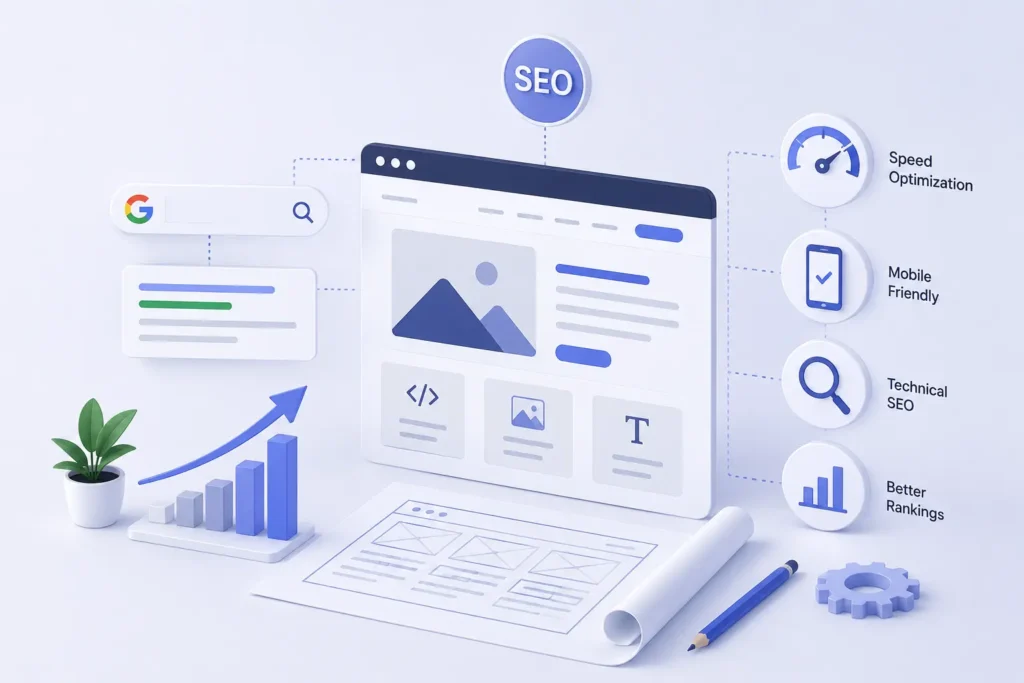
Website developers build the technical foundation of your website, while SEO ensures search engines can properly understand and rank it.
If the foundation is weak, even the best SEO strategy struggles to produce long-term results.
A professional website developer considers factors such as page speed, mobile responsiveness, clean code, URL structure, heading hierarchy, image optimization, and internal linking before writing a single line of content.
These decisions directly influence how Google crawls and evaluates your website.
Your Website Structure Matters More Than You Think
Search engines don’t just read content.
They also analyze how pages are connected.
A logical website structure helps Google discover pages faster while making navigation easier for visitors.
Example:
Home
↓
Services
↓
Website Development
↓
Portfolio
↓
Blog
↓
Contact
Instead of:
Home
↓
20 unrelated pages
↓
No hierarchy
↓
Broken navigation
Good architecture improves crawling, user experience, and SEO.
Clean URLs Improve Search Visibility
Compare these two URLs.
❌
example.com/page?id=47291✅
example.com/website-development-hyderabadClean URLs improve readability for both users and search engines.
Professional website development includes planning URLs before launch instead of changing them later.
Mobile Responsiveness Is Now an SEO Requirement
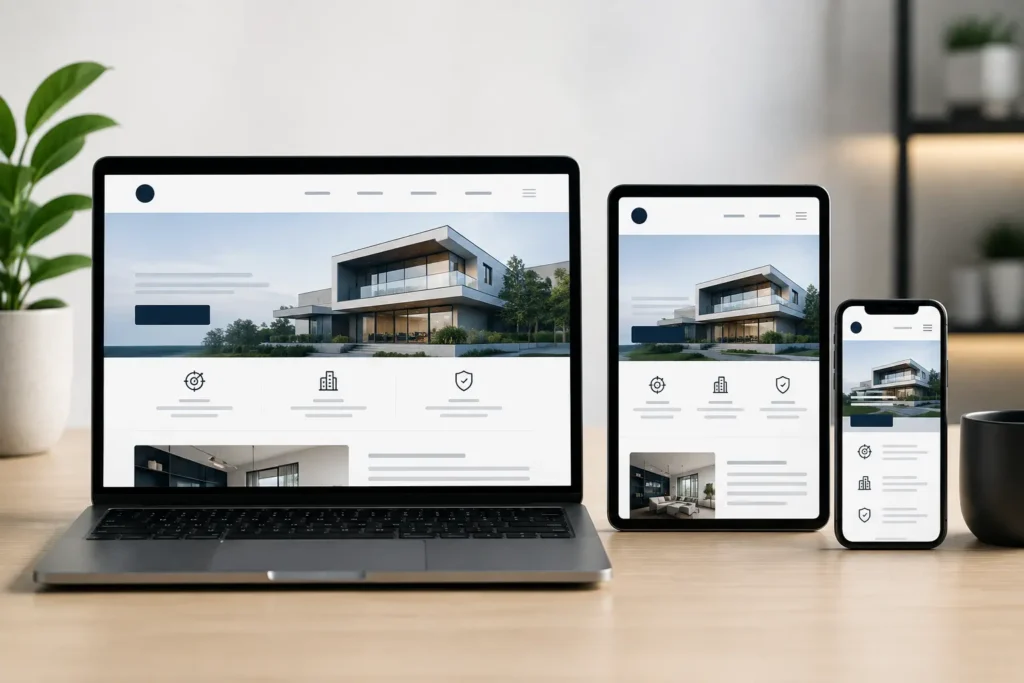
Google primarily indexes the mobile version of websites.
If your website performs poorly on smartphones, rankings often suffer regardless of desktop performance.
Professional developers optimize:
- Responsive layouts
- Touch-friendly navigation
- Readable typography
- Optimized images
- Mobile performance
This creates a better experience for users while satisfying Google’s mobile-first indexing requirements.
Website Speed Directly Affects Rankings
Speed is one of Google’s confirmed ranking signals.
Visitors expect pages to load within a few seconds.
Slow websites increase bounce rates and reduce conversions.
Professional website development improves speed through:
- Image optimization
- Modern image formats
- Lazy loading
- Browser caching
- Code minification
- Efficient hosting
- CDN implementation
Speed improvements help both SEO and user experience.
Technical SEO Should Be Built Before Launch
Technical SEO isn’t something you “add later.”
It should already exist when your website launches.
This includes:
✓ XML Sitemap
✓ Robots.txt
✓ Schema Markup
✓ HTTPS
✓ Canonical URLs
✓ Breadcrumbs
✓ Structured Headings
✓ Optimized Metadata
✓ Internal Linking
✓ Crawlable Navigation
These elements help search engines understand your website immediately.
Internal Linking Should Be Planned Early
One of the biggest SEO mistakes is creating pages without considering how they’ll connect.
A good website naturally links between:
- Services
- Portfolio
- About
- Blogs
- Contact
Internal links distribute authority across your website while helping users discover additional content.
Example:
If someone reads your article about website redesign, they should easily navigate to your Website Development Services page.
Image Optimization Begins During Development
Images often account for most of a webpage’s loading time.
Professional website development ensures:
- Proper dimensions
- Compression
- WebP format
- Lazy loading
- Descriptive filenames
- Alt text
Example:
Bad
IMG_837462.jpgGood
website-development-hyderabad.webpCore Web Vitals Influence User Experience
Google evaluates websites using Core Web Vitals.
These include:
Largest Contentful Paint (LCP)
Interaction to Next Paint (INP)
Cumulative Layout Shift (CLS)
A properly developed website performs better across these metrics, improving both SEO and visitor satisfaction.
Content Alone Won’t Fix Poor Development
Many businesses publish dozens of blogs expecting higher rankings.
Unfortunately, if the website itself suffers from technical issues, content alone cannot solve the problem.
Strong SEO combines:
Excellent content
Technical SEO
Fast performance
Great user experience
Quality backlinks
Professional website development creates the foundation that supports every future SEO effort.
Common SEO Mistakes During Website Development
Businesses often launch websites with problems like:
- Missing H1 headings
- Duplicate title tags
- Slow images
- Poor URL structure
- Broken internal links
- Missing schema
- No sitemap
- Poor mobile experience
- Thin service pages
- No redirects
Fixing these after launch is significantly more expensive than building correctly from the beginning.

Why Businesses Should Think About SEO Before Hiring a Developer
When choosing a website developer, don’t just ask about design.
Ask questions like:
- Will the website follow SEO best practices?
- How will page speed be optimized?
- Is schema markup included?
- Will image optimization be handled?
- Does the website include structured URLs?
- Is technical SEO part of development?
The answers will tell you whether the developer builds websites that simply look good—or websites that actually perform.
Final Thoughts
SEO doesn’t begin after your website goes live.
It begins the moment your website is planned.
Every decision made during development—from website architecture and page speed to mobile responsiveness, URL structure, image optimization, and internal linking—contributes to your website’s long-term visibility in search engines.
Businesses that invest in SEO-friendly website development save time, avoid costly fixes, and create a stronger foundation for future digital marketing.
If you’re planning a new website or redesigning an existing one, integrating SEO from day one will help your website rank better, load faster, and deliver a better experience for both users and search engines.
FAQ
Yes. Technical SEO, page structure, website speed, URLs, metadata, and mobile responsiveness should all be implemented during development.
Yes, but fixing technical issues after launch is often more time-consuming and expensive than building an SEO-friendly website from the start.
Yes. Website speed is a confirmed ranking factor and also improves user experience and conversion rates.
Professional website development should include technical SEO best practices, but ongoing content creation and link building are typically separate SEO activities.