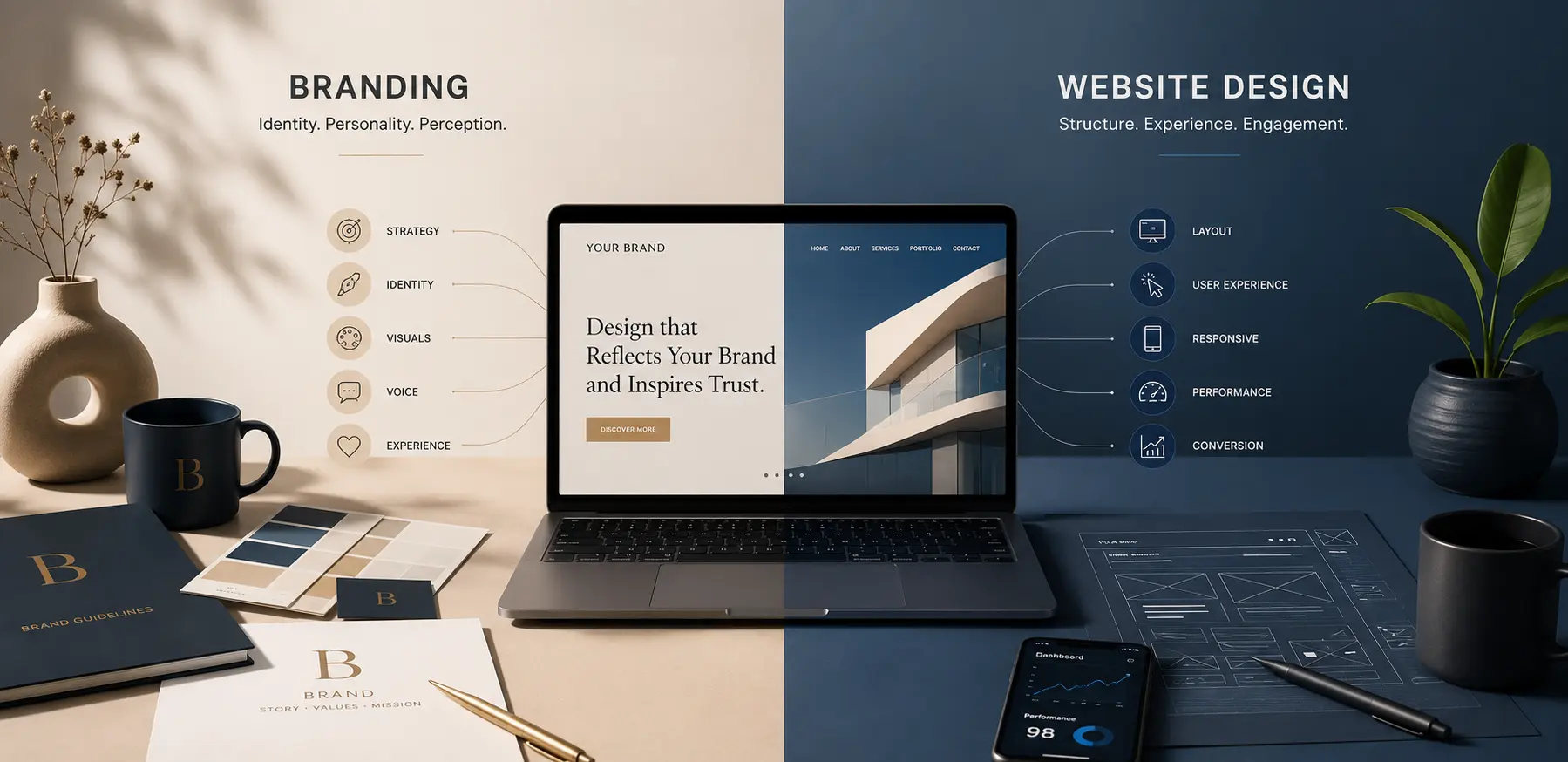
Your website is often the very first interaction people have with your business. Before they speak to your sales team, visit your office, or purchase your product, they experience your brand through your website.
This is why website design and branding should never be treated as separate disciplines. A visually attractive website may capture attention, but without a strong brand behind it, it won’t leave a lasting impression. Likewise, even the strongest brand strategy can lose its impact if it’s presented through a poorly designed website.
In today’s digital-first world, your website is your brand’s most powerful touchpoint. Understanding the relationship between website design and branding is essential for creating experiences that build trust, improve conversions, and establish long-term customer loyalty.
What Is Branding?
Branding is the complete perception people have of your business. It includes your purpose, values, personality, messaging, visual identity, tone of voice, and the experience customers have every time they interact with your company.
Branding is not just your logo.
It is how customers feel when they visit your website, read your content, receive your emails, or use your products.
A strong brand creates recognition, trust, and emotional connection.
What Is Website Design?
Website design is the process of creating digital experiences that are visually appealing, functional, and user-friendly.
Modern website design goes far beyond aesthetics. It involves user experience (UX), interface design (UI), accessibility, responsiveness, loading speed, navigation, content hierarchy, and interaction design.
A well-designed website guides visitors toward meaningful actions while reinforcing the identity of your brand.
How Branding and Website Design Work Together
Think of branding as the personality of your business and your website as the place where that personality comes to life.
Your branding defines how your business should look, speak, and feel.
Website design translates those ideas into an interactive digital experience.
Without branding, a website becomes generic.
Without thoughtful website design, branding loses its ability to create memorable experiences.
The strongest digital brands align strategy, visuals, messaging, and user experience into one seamless journey.
Your Website Is Your Digital Brand Ambassador
Unlike a physical office that operates during business hours, your website represents your brand 24 hours a day.
Every visitor forms an opinion about your business within seconds.
They notice your typography.
They observe your colors.
They judge your professionalism.
They evaluate your credibility.
They decide whether your business feels trustworthy.
All of these decisions happen before they even read your content.
This is why website design directly influences how your brand is perceived.
Elements of Website Design That Strengthen Your Brand
Visual Identity
Consistent use of colors, typography, icons, photography, and spacing reinforces your brand identity across every page.
Visitors should immediately recognize your business regardless of which page they land on.
Brand Messaging
Your copy should reflect your brand personality.
Whether your brand is premium, approachable, innovative, or playful, your messaging should remain consistent throughout the website.
User Experience
A frustrating website damages your brand.
Simple navigation, intuitive layouts, clear calls to action, and fast-loading pages communicate professionalism and reliability.
Good user experience builds trust.
Consistency
Consistency is one of the strongest characteristics of successful brands.
From the homepage to the contact page, every design element should feel like part of the same system.
Consistency makes businesses appear established and dependable.
Performance
Website speed has become part of branding.
Slow websites communicate inefficiency.
Fast websites communicate professionalism.
Visitors often associate technical quality with business quality.
Why Branding Should Come Before Website Design
Many businesses begin by selecting colors or designing pages without first defining their brand.
This often leads to inconsistent websites that fail to communicate a clear identity.
Before designing a website, businesses should define:
- Their mission
- Target audience
- Brand positioning
- Brand personality
- Core messaging
- Visual identity
- Tone of voice
Once these foundations are established, website design becomes significantly more effective because every design decision supports the overall brand strategy.
Common Website Branding Mistakes
Treating the Logo as the Entire Brand
A logo alone cannot create trust.
Customers remember experiences far more than symbols.
Inconsistent Visual Design
Using different colors, fonts, and styles across pages creates confusion and weakens brand recognition.
Generic Stock Photography
Authentic visuals help businesses appear more trustworthy.
Poor-quality or overused stock images often reduce credibility.
Ignoring Mobile Experience
Most users now visit websites from mobile devices.
A poor mobile experience damages both user satisfaction and brand perception.
Weak Calls to Action
Visitors should always know what action to take next.
Clear buttons, meaningful messaging, and logical navigation improve both user experience and business results.
How Good Website Design Builds Brand Trust
Trust is one of the most valuable assets a business can build.
Professional website design contributes to trust through several factors:
A clean layout demonstrates professionalism.
Consistent branding improves recognition.
Fast performance creates confidence.
Clear messaging reduces uncertainty.
Secure browsing reassures visitors.
Accessible design makes your business feel inclusive.
Every interaction influences how trustworthy your brand appears.
The Role of UI and UX in Branding
User Interface (UI) determines how your website looks.
User Experience (UX) determines how your website feels.
Together, they shape your brand experience.
Visitors rarely remember every design element.
They remember how easy your website was to navigate.
They remember how quickly they found information.
They remember whether the experience felt enjoyable.
These memories become part of your brand.
Real-World Example
Imagine two architecture firms offering identical services.
The first has an outdated website, inconsistent typography, poor navigation, and slow loading times.
The second has elegant visuals, refined typography, intuitive navigation, immersive project galleries, and clear messaging.
Both firms may possess equal expertise.
However, the second firm immediately appears more premium because its website reflects the quality of its brand.
Perception influences purchasing decisions.
Benefits of Aligning Branding and Website Design
Businesses that integrate branding into website design often experience:
- Stronger brand recognition
- Higher customer trust
- Improved conversion rates
- Better user engagement
- Increased customer loyalty
- Greater competitive advantage
- More effective digital marketing campaigns
- Higher perceived value
A website that reflects your brand becomes one of your most valuable business assets.
Building a Brand-First Website
Creating a successful website begins with understanding your brand.
Rather than asking, “What should our homepage look like?”, ask:
What do we want visitors to feel?
What should they remember?
What makes us different?
How should we communicate our value?
When branding guides website design, every page supports a consistent business story.
Final Thoughts
Website design and branding are inseparable.
Branding defines who your business is.
Website design communicates that identity through digital experiences.
Businesses that invest in both create stronger first impressions, build lasting trust, and establish deeper relationships with their audience.
Whether you’re launching a startup, redesigning an existing website, or refreshing your brand identity, treating website design as an extension of your brand is one of the smartest investments you can make.
Your website should do more than look beautiful.
It should tell your story, communicate your values, and create memorable experiences that people associate with your brand.